Many people search for “17+ synonyms for wily” when they want a better word for someone who is clever in a sneaky way.
Maybe you are writing an essay, a story, a business email, or even a social media post. You know “wily” sounds right — but you want more options.
Strong writing depends on word variety. Using the same word again and again makes your message weak. But choosing the wrong synonym can change your tone or meaning.
That is why understanding alternatives matters.
In academic writing, you may need a formal term. In professional settings, you may want something neutral. In casual speech, you might prefer something playful.
This guide gives you clear, simple, and powerful options — so you can choose the best synonym for any situation.
Let’s explore the meaning of “wily” and discover smart alternatives you can use right away.
What Does “Wily” Mean?
The word wily describes someone who is clever in a tricky or sneaky way. A wily person uses intelligence to get what they want — often through strategy, manipulation, or quiet planning.
It usually carries a slightly negative tone. It suggests smart thinking, but not always honest behavior.
Common situations where “wily” is used:
- Describing a tricky opponent
- Talking about a clever negotiator
- Referring to someone who avoids rules
- Writing about crafty fictional characters
Example:
The wily businessman found a way around the new policy.
Now let’s look at the best alternatives.
17+ Best Synonyms for “Wily”
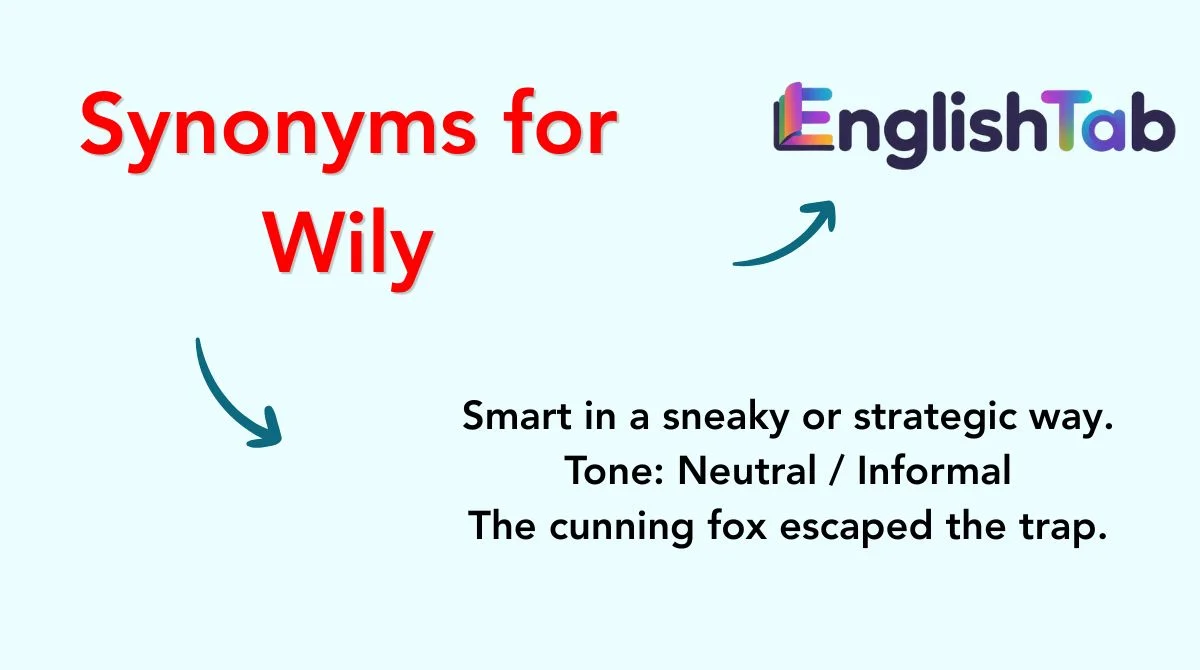
1. Cunning
Smart in a sneaky or strategic way.
Tone: Neutral / Informal
The cunning fox escaped the trap.
2. Crafty
Skilled at tricking others or solving problems cleverly.
Tone: Informal
She made a crafty plan to win the game.
3. Sly
Secretly clever, often playful or sneaky.
Tone: Casual
He gave a sly smile after hearing the news.
4. Shrewd
Sharp in judgment, especially in business.
Tone: Professional
She is a shrewd investor.
5. Astute
Very aware and able to understand situations quickly.
Tone: Academic / Professional
The manager made an astute decision.
6. Devious
Using dishonest or unfair methods.
Tone: Negative
The villain had a devious scheme.
7. Scheming
Always planning something secret or tricky.
Tone: Negative
The scheming character caused chaos.
8. Manipulative
Good at controlling others unfairly.
Tone: Psychological / Formal
He was manipulative in negotiations.
9. Strategic
Focused on careful planning to win.
Tone: Professional
Her strategic thinking helped the company grow.
10. Calculating
Carefully planning actions for personal gain.
Tone: Formal
His calculating moves shocked everyone.
11. Guileful
Full of clever tricks or deceit.
Tone: Literary
The guileful leader fooled the crowd.
12. Artful
Skillfully clever, sometimes slightly deceptive.
Tone: Literary
She gave an artful response.
13. Tricky
Hard to deal with; slightly deceptive.
Tone: Casual
That was a tricky question.
14. Foxy
Clever in a playful or sneaky way.
Tone: Informal
The foxy player outsmarted his rivals.
15. Sharp
Quick-thinking and smart.
Tone: Casual / Professional
She is sharp in meetings.
16. Savvy
Street-smart and practical.
Tone: Informal
He is tech-savvy.
17. Resourceful
Able to find clever solutions.
Tone: Positive
The resourceful student solved the problem.
18. Cagey
Careful and secretive about plans.
Tone: Informal
The witness was cagey during questioning.
Stronger Alternatives (More Intense Options)
If you want a stronger tone than “wily,” try these:
- Machiavellian – Extremely strategic and manipulative
- Conniving – Secretly planning harm
- Duplicitous – Two-faced or dishonest
- Underhanded – Dishonest in a subtle way
- Unscrupulous – Lacking moral principles
- Crafty-minded – Focused on trickery
Use these when writing about villains, corruption, betrayal, or strong criticism. Avoid them in neutral or positive settings.
Softer or Polite Alternatives
If you want a lighter tone, these work better:
- Clever
- Smart
- Sharp-minded
- Quick-thinking
- Perceptive
- Insightful
- Observant
These words remove the negative feeling and focus on intelligence instead.
Example:
Instead of “a wily negotiator,” say “a perceptive negotiator.”
Academic & IELTS-Friendly Alternatives
For essays, research papers, or formal exams, use these:
- Astute
- Strategic
- Analytical
- Discerning
- Calculated
- Perspicacious
- Judicious
- Pragmatic
- Tactical
- Methodical
These sound professional and precise. They are strong choices in IELTS Writing Task 2 or academic reports.
Example:
The leader adopted a pragmatic and strategic approach.
Synonyms You Should Avoid (Context Warning)
Some words seem similar but can confuse readers.
1. Evil
Too strong. Suggests moral corruption, not cleverness.
2. Smart
Too broad. It does not suggest trickery.
3. Greedy
Focuses on desire for money, not strategy.
4. Sneaky
Very informal and childish in tone.
5. Intelligent
Neutral intelligence, no hidden meaning.
Choose words carefully to avoid changing your message.
How to Choose the Right Synonym in Writing
1. Consider Context
Are you describing a villain? A business leader? A friend?
Match the word to the situation.
2. Think About Tone
Do you want criticism, praise, or neutrality?
“Devious” sounds harsh.
“Strategic” sounds professional.
3. Know Your Audience
Academic readers prefer “astute” or “strategic.”
Casual readers accept “sly” or “crafty.”
4. Keep It Clear
Do not choose rare words just to sound smart.
Clarity always wins.
Example Paragraph Rewritten Using Synonyms
Original:
The wily politician found a way to avoid the question.
Rewrites:
- The cunning politician avoided the question skillfully.
- The astute politician redirected the discussion.
- The calculating politician changed the topic.
- The strategic politician shifted focus carefully.
- The sly politician smiled and gave a vague answer.
Each synonym slightly changes the tone.
FAQs
What is the closest synonym to wily?
“Cunning” is the closest and most common replacement.
Is wily positive or negative?
It is slightly negative because it suggests trickery.
Can wily be used in formal writing?
Yes, but academic writing often prefers “astute” or “strategic.”
What is a stronger word than wily?
“Machiavellian” or “conniving” are stronger and more negative.
Is crafty the same as wily?
Yes, but “crafty” is more informal.
What is a polite way to say wily?
“Perceptive” or “clever” are softer options.
Is wily good for IELTS essays?
It is acceptable, but academic synonyms sound better.
Conclusion
Finding the right synonym for “wily” depends on tone, audience, and purpose. The word suggests cleverness mixed with strategy — sometimes with a touch of dishonesty.
In casual writing, “sly” or “crafty” works well. In business settings, “shrewd” or “strategic” is better. In academic writing, “astute” or “pragmatic” sounds more polished.
Strong writing is not about using complex words. It is about using the right word. With the options in this guide, you can choose confidently and improve your vocabulary for 2026 and beyond.

Dorian Hale is an English language enthusiast and content creator dedicated to making vocabulary and grammar learning simple, engaging, and accessible for everyone.