Many people search for synonyms for trepidation when they want to avoid repeating the same word in writing.
Others look for a better word that fits a specific tone. Maybe you are writing an essay. Maybe you are drafting a speech. Or maybe you just want your story to sound more natural.
“Trepidation” is a strong word. It carries emotion. But using it too often can weaken your message. That is why word variety matters.
In academic writing, the right synonym can improve clarity and score. In professional settings, it can shape how confident or cautious you sound. In casual writing, it helps your voice feel real and fresh.
This guide gives you over 18 carefully explained synonyms for trepidation. Each word includes tone guidance and an example sentence.
You will also find stronger options, softer alternatives, academic-friendly choices, and words to avoid.
Let’s begin.
What Does “Trepidation” Mean?
Trepidation means a feeling of fear, worry, or anxiety about something that may happen.
It is not loud panic. It is not total fear. It is often quiet and internal. You feel unsure. You feel uneasy. You expect something difficult or unpleasant.
Tone of the Word
- Slightly formal
- Often used in academic or literary writing
- Can sound dramatic in casual speech
When It Is Commonly Used
- Before a big decision
- Before an exam or interview
- When facing change
- When expecting bad news
- In storytelling to build tension
Example:
She opened the email with trepidation.
18+ Best Synonyms for “Trepidation”
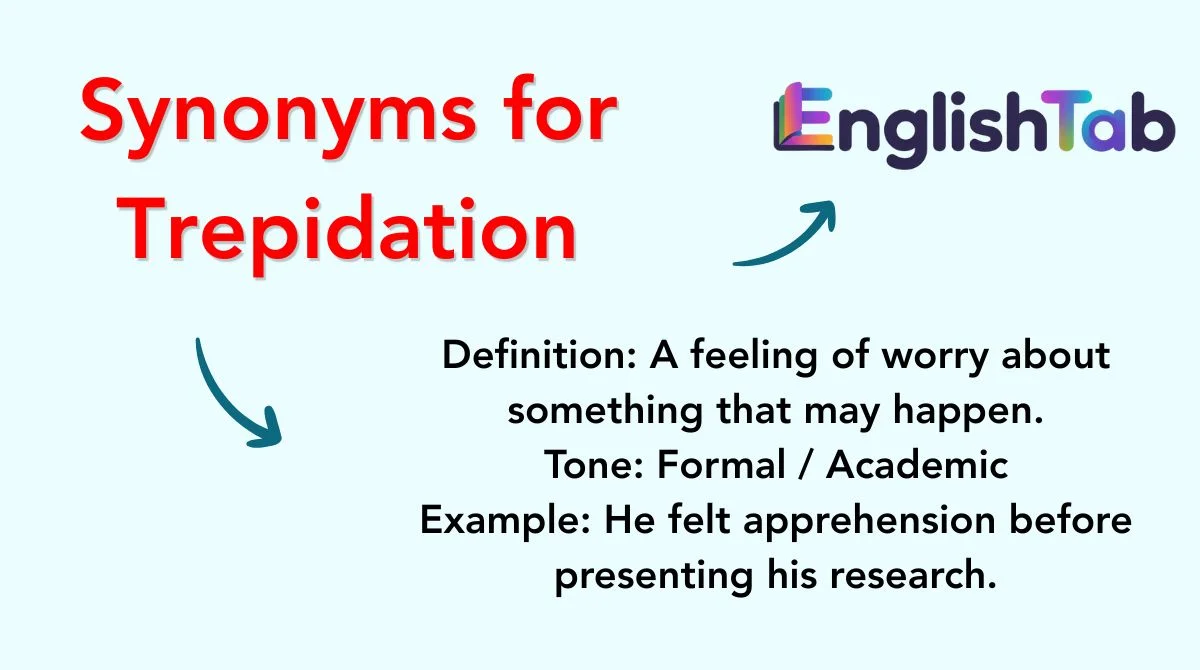
1. Apprehension
Definition: A feeling of worry about something that may happen.
Tone: Formal / Academic
Example: He felt apprehension before presenting his research.
2. Anxiety
Definition: A strong feeling of nervousness or concern.
Tone: Neutral / Academic
Example: She experienced anxiety before the final exam.
3. Unease
Definition: A mild feeling of discomfort or worry.
Tone: Neutral
Example: There was a sense of unease in the room.
4. Nervousness
Definition: A shaky or tense feeling before an event.
Tone: Casual / Neutral
Example: His nervousness showed during the interview.
5. Fear
Definition: A strong emotion caused by danger or threat.
Tone: Neutral
Example: Fear stopped her from speaking up.
6. Dread
Definition: A deep fear about something unpleasant that is coming.
Tone: Strong / Literary
Example: She felt dread before the surgery.
7. Concern
Definition: A feeling of worry about a possible problem.
Tone: Professional / Neutral
Example: The manager expressed concern about the delay.
8. Worry
Definition: Repeated thoughts about possible trouble.
Tone: Casual
Example: His worry kept him awake at night.
9. Misgiving
Definition: A doubt or uneasy feeling about something.
Tone: Formal
Example: She had misgivings about signing the contract.
10. Doubt
Definition: A lack of confidence or certainty.
Tone: Neutral
Example: There was doubt in his voice.
11. Foreboding
Definition: A strong sense that something bad will happen.
Tone: Literary
Example: A feeling of foreboding filled the air.
12. Distress
Definition: Emotional pain or anxiety.
Tone: Formal
Example: The news caused great distress.
13. Tension
Definition: Mental or emotional strain.
Tone: Neutral
Example: Tension grew before the results were announced.
14. Alarm
Definition: Sudden fear or concern.
Tone: Formal
Example: The message caused alarm among staff.
15. Restlessness
Definition: An uneasy inability to relax.
Tone: Neutral
Example: He felt restlessness the night before his flight.
16. Edginess
Definition: A slightly tense or jumpy feeling.
Tone: Casual
Example: Her edginess was clear during the meeting.
17. Hesitation
Definition: A pause caused by uncertainty.
Tone: Neutral
Example: There was hesitation before he answered.
18. Intimidation
Definition: Fear caused by pressure or authority.
Tone: Formal
Example: She felt intimidation in the boardroom.
19. Anticipatory Fear
Definition: Fear felt before something happens.
Tone: Academic
Example: Anticipatory fear is common before public speaking.
Stronger Alternatives (More Intense Options)
Use these when the emotion is deeper than simple trepidation.
- Dread – For serious or heavy situations.
- Terror – When fear is extreme.
- Panic – When control is lost.
- Horror – For shocking or traumatic events.
- Anguish – For emotional suffering.
- Despair – When hope feels lost.
- Paralyzing fear – When fear stops action.
These words are powerful. Use them carefully. They fit dramatic scenes, crisis writing, or emotional storytelling.
Softer or Polite Alternatives
These work well in professional or diplomatic writing.
- Concern
- Uncertainty
- Hesitation
- Caution
- Reluctance
- Unease
- Reservation
Example in business writing:
We have some reservations about the proposed timeline.
These words reduce emotional weight. They sound calm and controlled.
Academic & IELTS-Friendly Alternatives
If you are preparing for exams or formal essays, these options show vocabulary range:
- Apprehension
- Anxiety
- Psychological distress
- Emotional strain
- Anticipatory anxiety
- Foreboding
- Mental tension
- Reluctance
- Insecurity
- Cognitive unease
Example:
Students often experience anticipatory anxiety before high-stakes examinations.
These terms are suitable for essays, research papers, and analytical writing.
Synonyms You Should Avoid (Context Warning)
Some words seem similar but can mislead readers.
1. Excitement
This is positive energy, not fear.
2. Shock
This is sudden surprise, not ongoing worry.
3. Suspense
Used for storytelling tension, not personal fear.
4. Shyness
This describes personality, not anxiety about events.
5. Suspicion
This relates to distrust, not fear of future events.
Using the wrong word can change the meaning of your sentence. Always check context.
How to Choose the Right Synonym in Writing
1. Consider Context
Is the situation serious? Mild? Professional? Dramatic?
2. Match the Tone
Academic writing needs formal words like apprehension.
Casual writing can use nervousness or worry.
3. Know Your Audience
Business readers prefer calm terms.
Story readers accept emotional words like dread.
4. Prioritize Clarity
Do not choose a complex word just to sound smart.
Clear writing always wins.
Example Paragraph Rewritten Using Synonyms
Original:
She opened the letter with trepidation.
Rewrite 1:
She opened the letter with apprehension.
Rewrite 2:
She opened the letter with unease.
Rewrite 3:
She opened the letter with dread.
Rewrite 4:
She opened the letter with nervousness.
Rewrite 5:
She opened the letter with quiet concern.
Each version changes the emotional intensity slightly.
FAQs
What is the closest synonym for trepidation?
Apprehension is the closest formal synonym.
Is trepidation stronger than anxiety?
Not always. Anxiety can be stronger depending on context.
Can trepidation be positive?
Usually no. It implies fear or worry.
Is trepidation formal?
Yes. It sounds more formal than “worry” or “nervousness.”
What is a simple word for trepidation?
Worry or nervousness are simple alternatives.
What is a strong word for extreme trepidation?
Dread or terror works for intense fear.
How can I use trepidation in a sentence?
He approached the stage with trepidation before giving his speech.
Conclusion
Trepidation is a powerful word. It describes fear mixed with uncertainty. But strong writing needs variety. Whether you are writing an essay, a report, or a story, choosing the right synonym can improve tone and clarity.
Use formal options like apprehension for academic writing. Choose softer words like concern for business settings. Select stronger words like dread for dramatic effect. Always match your word to the situation.
Mastering synonyms does not just improve vocabulary. It sharpens your voice. And in 2026, clear and precise writing matters more than ever.

Dorian Hale is an English language enthusiast and content creator dedicated to making vocabulary and grammar learning simple, engaging, and accessible for everyone.