Many people search for synonyms for field of study when writing essays, research papers, resumes, or professional bios.
The phrase is common—but repeating it too often makes writing sound dull. Strong writers know that word variety improves clarity and keeps readers engaged.
Whether you are a student, job seeker, teacher, or researcher, choosing the right term matters. In academic writing, precision shows expertise.
In professional settings, the right word builds authority. Even in casual conversations, vocabulary choice shapes how people see your knowledge.
Using fresh alternatives instead of repeating “field of study” helps your writing sound confident and polished. It also improves SEO performance, readability, and flow.
In this 2026 guide, you’ll discover over 20 powerful synonyms for field of study, organized by tone and context. You’ll also learn which words to avoid and how to pick the best option for your audience.
What Does “Field of Study” Mean?
A field of study is a subject or area of knowledge that someone learns about in school, college, or through research.
It refers to a focused branch of learning. For example:
- Biology
- Economics
- Psychology
- Computer Science
The tone of the phrase is neutral and formal. It is often used in:
- Academic writing
- University applications
- Research discussions
- Professional biographies
Because it is formal and general, it fits many situations. However, it can sound repetitive if used too often. That is why knowing strong alternatives is helpful.
20+ Best Synonyms for “Field of Study”
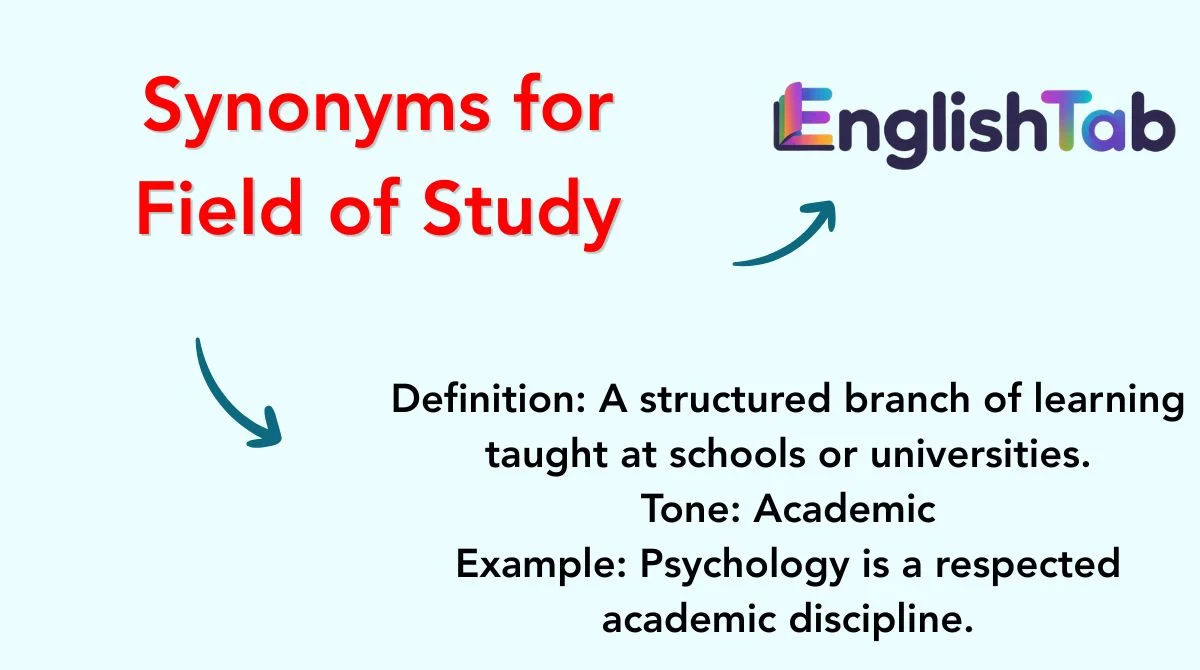
1. Academic Discipline
Definition: A structured branch of learning taught at schools or universities.
Tone: Academic
Example: Psychology is a respected academic discipline.
2. Area of Study
Definition: A specific subject someone focuses on learning.
Tone: Neutral
Example: Her area of study is environmental science.
3. Subject Area
Definition: A category of learning within education.
Tone: Formal
Example: Mathematics is his strongest subject area.
4. Branch of Knowledge
Definition: A division within a larger body of information.
Tone: Formal
Example: Astronomy is a branch of knowledge within physics.
5. Specialization
Definition: A narrow focus within a larger subject.
Tone: Professional
Example: Her specialization is pediatric nursing.
6. Major
Definition: The main subject a student studies in college.
Tone: Casual / Academic
Example: His major is computer engineering.
7. Concentration
Definition: A focused track within a degree program.
Tone: Academic
Example: She chose a concentration in marketing.
8. Line of Study
Definition: A chosen path of academic learning.
Tone: Formal
Example: He continued his line of study in data science.
9. Course of Study
Definition: A planned series of subjects taken to earn a degree.
Tone: Academic
Example: The course of study includes advanced biology labs.
10. Program
Definition: A structured academic path offered by an institution.
Tone: Neutral
Example: She enrolled in a law program.
11. Educational Focus
Definition: The main subject someone prioritizes in learning.
Tone: Neutral
Example: His educational focus is renewable energy.
12. Discipline
Definition: A recognized field within education or research.
Tone: Academic
Example: Economics is a competitive discipline.
13. Research Area
Definition: A topic someone investigates deeply.
Tone: Academic
Example: Her research area is climate change.
14. Domain
Definition: A specific area of knowledge or expertise.
Tone: Professional
Example: Cybersecurity is a growing domain.
15. Sector of Knowledge
Definition: A broad division of learning.
Tone: Formal
Example: Medicine is a major sector of knowledge.
16. Intellectual Pursuit
Definition: A subject studied for deep understanding.
Tone: Literary
Example: Philosophy is a lifelong intellectual pursuit.
17. Study Focus
Definition: The topic someone centers their learning on.
Tone: Neutral
Example: Her study focus is child psychology.
18. Knowledge Base
Definition: A body of information within a subject.
Tone: Professional
Example: His knowledge base includes machine learning.
19. Academic Field
Definition: A recognized category of higher education study.
Tone: Academic
Example: Linguistics is a growing academic field.
20. Expertise Area
Definition: A subject someone knows deeply.
Tone: Professional
Example: Her expertise area is tax law.
21. Training Area
Definition: A subject learned through formal instruction.
Tone: Professional
Example: His training area includes digital marketing.
Stronger Alternatives (More Intense Options)
Sometimes you want to show depth, mastery, or authority. These options add power:
- Specialty – Best for professional authority.
- Expertise – Highlights advanced knowledge.
- Scholarly Domain – Strong academic tone.
- Professional Discipline – Emphasizes career focus.
- Research Specialty – Ideal for PhD or scientific writing.
- Core Competency – Strong for resumes.
- Technical Domain – Good for STEM fields.
Use these when describing senior roles, academic research, or expert-level skill.
Softer or Polite Alternatives
When you want a lighter tone, try these:
- Learning Area
- Study Interest
- Academic Interest
- Focus Area
- Topic of Study
- Subject Interest
- Learning Path
These work well in personal statements, interviews, or casual conversations.
Academic & IELTS-Friendly Alternatives
For formal exams, research papers, or high-level essays, consider:
- Scholarly Discipline
- Academic Concentration
- Intellectual Domain
- Research Field
- Scientific Discipline
- Theoretical Framework Area
- Pedagogical Domain
- Area of Specialization
- Educational Discipline
- Field of Inquiry
These options improve lexical variety and help boost IELTS writing scores.
Synonyms You Should Avoid (Context Warning)
Some words may seem similar but can confuse readers:
1. Industry
Refers to business sectors, not academic learning.
2. Hobby
Implies casual interest, not formal study.
3. Job
Means employment, not education.
4. Talent
Refers to natural ability, not learned study.
5. Skill
A skill can come from practice, not necessarily academic study.
Using these incorrectly can weaken academic writing.
How to Choose the Right Synonym in Writing
Consider Context
Are you writing an academic paper or a resume? Formal contexts require structured terms like discipline or specialization.
Match the Tone
If writing casually, “major” or “study focus” works better than “scholarly domain.”
Think About Your Audience
Professors expect precise language. Employers prefer professional vocabulary. Friends prefer simple terms.
Keep Clarity First
Never choose a complex word if it confuses readers. Clear writing always wins.
Example Paragraph Rewritten Using Synonyms
Original:
My field of study is biology. This field of study focuses on living organisms. I chose this field of study because I enjoy research.
Rewritten Version:
My academic discipline is biology. This research field explores living organisms and their systems. I chose this specialization because I enjoy scientific investigation.
Notice how the second version sounds more professional and polished.
FAQs
What is another word for field of study?
Common alternatives include academic discipline, specialization, major, and research area.
Is “discipline” the same as field of study?
Yes, in academic contexts, discipline refers to a recognized branch of learning.
What synonym works best for resumes?
Specialization, expertise area, or core competency work best for resumes.
What is a casual synonym for field of study?
Major or study focus are more casual and conversational.
What word should I use in IELTS writing?
Academic discipline or research field are strong IELTS-friendly choices.
Can I use “industry” instead?
No. Industry refers to business sectors, not academic learning.
Why should I avoid repeating field of study?
Repetition weakens writing. Using synonyms improves flow, clarity, and engagement.
Conclusion
The phrase field of study is useful but easy to overuse. Strong writing depends on word variety and precision. Whether you are writing an academic essay, professional bio, resume, or personal statement, choosing the right synonym strengthens your message.
From formal terms like academic discipline to professional options like specialization, each alternative fits a specific tone and audience. The key is context. Select words that match your purpose and reader expectations.
Mastering these synonyms will improve clarity, elevate your writing, and make your work stand out in 2026 and beyond.

Dorian Hale is an English language enthusiast and content creator dedicated to making vocabulary and grammar learning simple, engaging, and accessible for everyone.