Opposites sharpen meaning. In academic writing, persuasive essays, and even everyday communication, contrast creates clarity.
When we understand a word deeply, we must also understand what it is not. Studying antonyms does more than expand vocabulary—it strengthens precision, tone control, and argumentative depth.
The word dignity carries moral, emotional, and social weight. It reflects self-respect, honor, and worth.
Therefore, its opposites are not merely dictionary reversals; they represent states of degradation, humiliation, moral collapse, or loss of respect.
This authoritative guide explores 18+ dignity antonyms, dividing them into direct, contextual, and emotional contrasts.
Each antonym is analyzed for meaning, nuance, tone, and academic application to ensure clarity and professional writing strength.
Definition and Core Meaning of “Dignity”
Dignity refers to:
- A state of being worthy of honor and respect
- Self-respect and composure
- Moral integrity
- Nobility of character
- Grace under pressure
Dignity can be internal (self-worth) or external (social respect). It may appear in situations of adversity, authority, suffering, leadership, or moral choice.
For example:
She faced the criticism with dignity.
Here, dignity suggests calm self-control and moral steadiness.
Because dignity blends self-respect, social honor, and moral strength, its antonyms vary depending on which dimension is being challenged.
Direct Opposites (Clear Contrasts)
These words most strongly and directly oppose dignity:
- Humiliation
- Degradation
- Disgrace
- Shame
- Dishonor
- Indignity
- Embarrassment
- Contempt
- Disrespect
- Debasement
- Depravity
- Corruption
- Meanness
- Pettiness
- Servility
- Subservience
- Self-abasement
- Ignominy
These terms reflect direct loss of honor, worth, or moral standing.
Contextual Opposites
Some words oppose dignity depending on situation and tone:
- Ridicule
- Mockery
- Arrogance
- Vanity
- Insolence
- Rudeness
- Vulgarity
- Crudeness
- Groveling
- Weakness
For example, arrogance may seem unrelated at first, but arrogance destroys dignified composure through excessive pride.
Similarly, vulgarity undermines refined dignity by promoting crude behavior.
Emotional & Tone-Based Opposites
Dignity carries emotional restraint and moral calm. Its emotional opposites often show emotional collapse or social injury:
- Humiliation (intense emotional injury)
- Shame (internalized loss of worth)
- Contempt (external disrespect)
- Ridicule (public mockery)
- Self-abasement (internal surrender of worth)
The emotional intensity varies:
- Embarrassment = mild loss of composure
- Shame = deeper moral discomfort
- Humiliation = extreme public degradation
Understanding emotional intensity prevents misuse in academic writing.
18+ Antonyms Explained in Detail
Humiliation
Meaning: Public loss of pride or self-respect.
Context: Social or institutional embarrassment.
Example: He endured humiliation after the false accusation.
Nuance: Stronger and more public than embarrassment.
Degradation
Meaning: Reduction in rank, status, or moral worth.
Context: Social injustice or moral collapse.
Example: The prisoners suffered physical and psychological degradation.
Nuance: Implies systematic stripping of dignity.
Disgrace
Meaning: Loss of honor due to wrongdoing.
Context: Public scandal or moral failure.
Example: The scandal brought disgrace to the organization.
Nuance: Focuses on reputation damage.
Shame
Meaning: Painful awareness of wrongdoing or inadequacy.
Context: Moral or emotional regret.
Example: She felt deep shame for her actions.
Nuance: Internal feeling rather than public exposure.
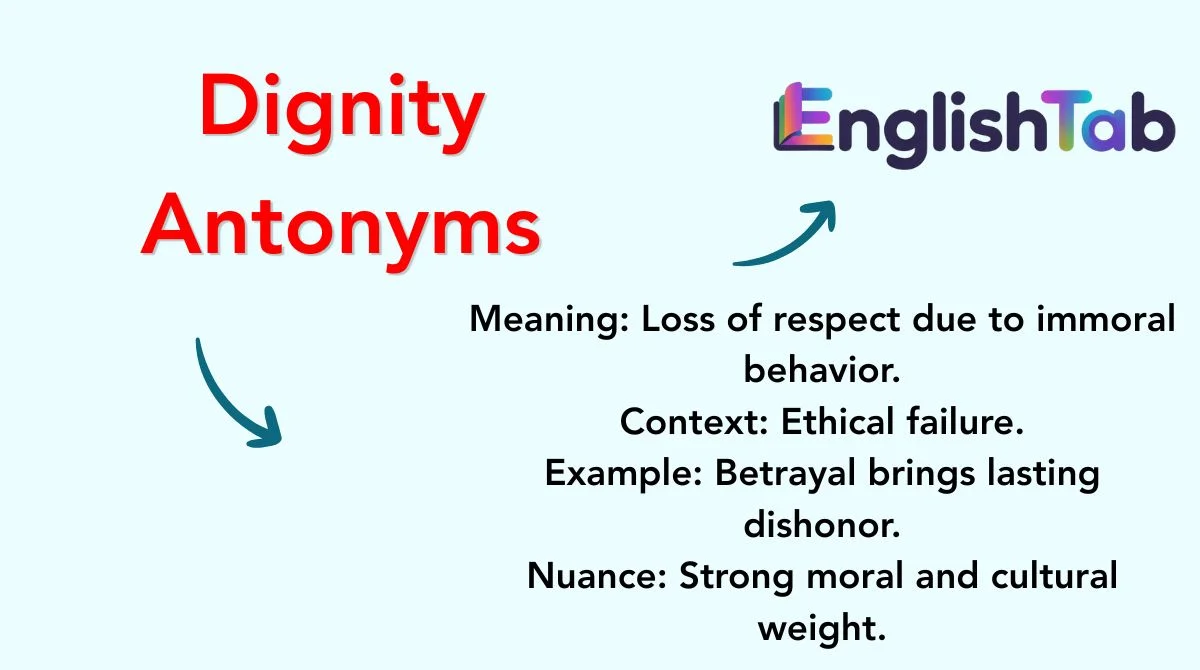
Dishonor
Meaning: Loss of respect due to immoral behavior.
Context: Ethical failure.
Example: Betrayal brings lasting dishonor.
Nuance: Strong moral and cultural weight.
Indignity
Meaning: Treatment that insults self-respect.
Context: Social injustice.
Example: The using man endured indignity in neglect.
Nuance: Focuses on unfair treatment rather than personal fault.
Embarrassment
Meaning: Mild social discomfort.
Context: Minor social errors.
Example: He laughed off the embarrassment.
Nuance: Much weaker than humiliation.
Contempt
Meaning: Feeling that someone is worthless.
Context: Social or moral judgment.
Example: The leader spoke with open contempt.
Nuance: Opposes dignity by denying value.
Disrespect
Meaning: Lack of proper regard.
Context: Everyday interactions.
Example: Interrupting elders shows disrespect.
Nuance: Less severe than dishonor.
Debasement
Meaning: Corruption or lowering of moral quality.
Context: Ethical decline.
Example: The regime engaged in moral debasement.
Nuance: Suggests corruption of character.
Depravity
Meaning: Extreme moral corruption.
Context: Criminal or unethical conduct.
Example: The crime reflected shocking depravity.
Nuance: Stronger and darker than debasement.
Corruption
Meaning: Dishonest or unethical behavior.
Context: Politics or institutions.
Example: Corruption destroys civic dignity.
Nuance: Focuses on systemic decay.
Meanness
Meaning: Small-minded cruelty.
Context: Personal behavior.
Example: His meanness embarrassed the family.
Nuance: Everyday moral weakness.
Pettiness
Meaning: Trivial concern with small matters.
Context: Personal conflicts.
Example: Pettiness undermines leadership dignity.
Nuance: Not immoral, but undignified.
Servility
Meaning: Excessive eagerness to please.
Context: Power imbalance.
Example: His servility weakened his authority.
Nuance: Loss of self-respect.
Subservience
Meaning: Submission without self-worth.
Context: Hierarchical relationships.
Example: Blind subservience destroys independence.
Nuance: Slightly broader than servility.
Self-abasement
Meaning: Voluntary lowering of oneself.
Context: Psychological surrender.
Example: He spoke in self-abasement.
Nuance: Internal collapse of dignity.
Ignominy
Meaning: Public shame or disgrace.
Context: Historical or political downfall.
Example: The defeat ended in ignominy.
Nuance: Formal and intense.
Vulgarity
Meaning: Lack of refinement or decency.
Context: Social etiquette.
Example: Vulgarity contrasts with professional dignity.
Nuance: Focuses on behavior, not morality.
Antonym Comparison Table
| Word | Public or Private | Moral Weight | Emotional Intensity | Formality Level |
|---|---|---|---|---|
| Humiliation | Public | Medium | High | Neutral |
| Shame | Private | High | Medium | Neutral |
| Disgrace | Public | High | High | Formal |
| Dishonor | Public | Very High | High | Formal |
| Embarrassment | Public | Low | Low | Informal |
| Indignity | Public | Medium | Medium | Formal |
| Servility | Private | Medium | Low | Formal |
| Depravity | Public | Extreme | High | Very Formal |
This comparison prevents vocabulary misuse in academic writing.
Academic Writing Examples
- The policy stripped citizens of their dignity and reduced them to humiliation.
- Corruption within leadership results in institutional disgrace.
- The witness endured indignity but maintained composure.
- Excessive servility undermines democratic ideals.
- Public ridicule can permanently damage personal dignity.
Notice how each antonym adjusts tone and intensity.
When Not to Replace the Word
Avoid replacing dignity when:
- The meaning refers to inherent human worth.
- The sentence requires neutrality rather than emotional charge.
- The context is legal or philosophical (e.g., human dignity debates).
- You need positive tone balance rather than contrast.
Example mistake:
Incorrect: “He lost his embarrassment.”
Correct: “He lost his dignity.”
Precision matters.
Practice Exercises
- Replace dignity with a strong antonym:
The leader acted without dignity. - Choose the correct antonym:
The public scandal caused ______.
a) Pettiness
b) Ignominy
c) Embarrassment - Identify tone difference:
Compare humiliation and shame. - Write a sentence using servility as an opposite of dignity.
- Explain the difference between dishonor and disgrace.
FAQs
What is the strongest antonym of dignity?
Ignominy and dishonor are among the strongest because they imply severe public shame and moral collapse.
Is embarrassment an antonym of dignity?
Yes, but it is a mild and situational opposite, not a moral one.
How does humiliation differ from shame?
Humiliation is usually public and imposed by others, while shame is internal and emotional.
Can arrogance be an opposite of dignity?
In some contexts, yes. Arrogance destroys balanced self-respect and appears undignified.
Which antonym is most formal?
Ignominy, dishonor, and depravity are more formal and academic.
Conclusion
Understanding 18+ dignity antonyms expands far beyond memorizing opposites. It requires examining moral depth, emotional intensity, public versus private contexts, and tone precision.
Dignity reflects self-worth, honor, and moral composure. Its antonyms—ranging from embarrassment to ignominy—represent varying degrees of lost respect, corruption, or degradation.
For academic writing in 2K26 and beyond, mastery of contrast builds clarity, authority, and persuasive strength. Vocabulary precision is intellectual precision.
Use these antonyms thoughtfully. Meaning lives in nuance.

Dorian Hale is an English language enthusiast and content creator dedicated to making vocabulary and grammar learning simple, engaging, and accessible for everyone.