Many people search for consternation synonyms because they want a better way to express strong surprise, shock, or worry in writing.
The word consternation sounds formal and serious. But using the same word again and again can make your writing feel flat.
Writers, students, bloggers, and professionals all need word variety. In academic essays, strong vocabulary improves clarity and grades.
In business emails, the right word helps you sound calm and precise. In stories and casual writing, better word choices create stronger emotion.
That’s why learning multiple synonyms for consternation is powerful. Some alternatives are softer. Some are stronger. Some fit formal settings, while others sound natural in daily speech.
In this guide, you’ll discover 15+ consternation synonyms, stronger options, softer replacements, academic-friendly terms, and examples that show exactly when to use each one.
What Does “Consternation” Mean?
Consternation means a sudden feeling of shock, confusion, or anxiety caused by something unexpected.
It often carries a tone of:
- Surprise
- Worry
- Alarm
- Distress
People use it when something disrupts expectations.
Common situations:
- Bad news at work
- Unexpected rule changes
- Sudden announcements
- Surprising behavior
Example:
The new policy caused consternation among employees.
The tone is usually formal and slightly dramatic. It is not casual language. That’s why many writers look for alternatives that better match their tone.
15+ Best Synonyms for “Consternation”
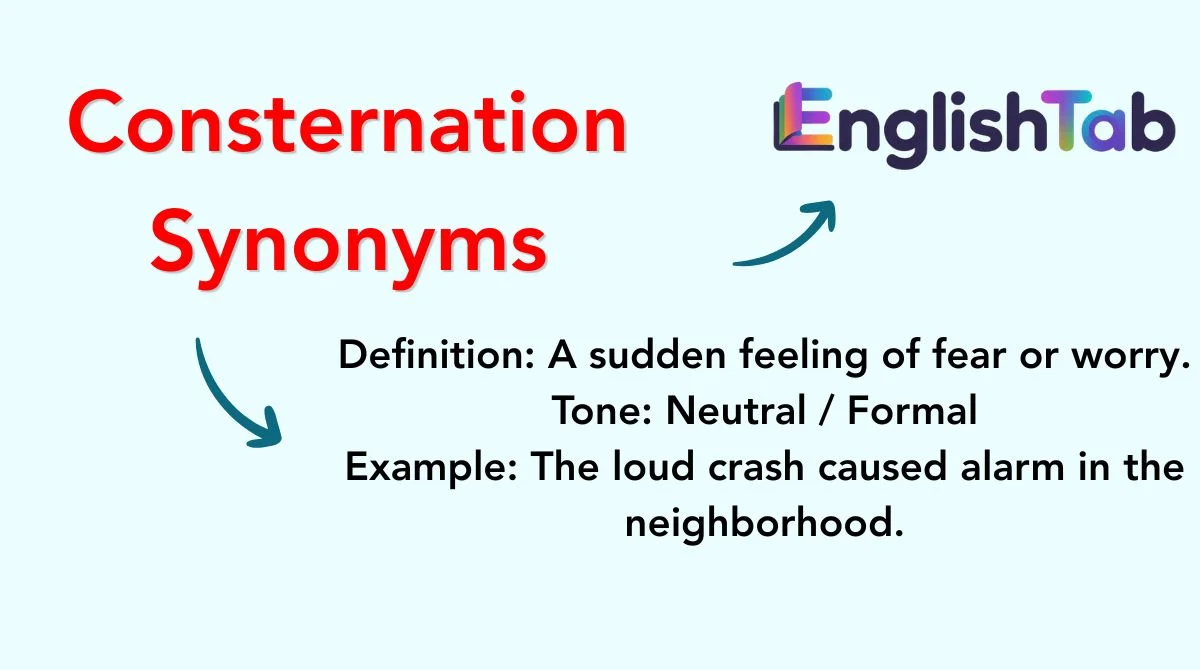
1. Alarm
Definition: A sudden feeling of fear or worry.
Tone: Neutral / Formal
Example: The loud crash caused alarm in the neighborhood.
2. Shock
Definition: A strong reaction to something unexpected.
Tone: Neutral
Example: She stared in shock after hearing the news.
3. Dismay
Definition: A feeling of sadness mixed with worry.
Tone: Formal
Example: The team reacted with dismay to the sudden loss.
4. Distress
Definition: Deep worry or emotional pain.
Tone: Formal / Academic
Example: The announcement caused great distress among staff.
5. Anxiety
Definition: Uneasy fear about what might happen.
Tone: Neutral / Academic
Example: The delay created anxiety among travelers.
6. Bewilderment
Definition: Confusion and surprise at the same time.
Tone: Literary
Example: He looked around in bewilderment.
7. Panic
Definition: Sudden, overwhelming fear.
Tone: Strong / Casual
Example: The fire alarm triggered panic in the building.
8. Concern
Definition: A mild feeling of worry.
Tone: Neutral
Example: The changes raised concern among parents.
9. Apprehension
Definition: Nervous fear about something that may happen.
Tone: Formal
Example: She waited with apprehension for the results.
10. Astonishment
Definition: Great surprise.
Tone: Neutral / Literary
Example: He watched in astonishment as the door opened.
11. Agitation
Definition: Nervous excitement or worry.
Tone: Formal
Example: The rumor caused agitation in the office.
12. Unease
Definition: A small but clear feeling of discomfort.
Tone: Neutral
Example: There was unease in the room after the comment.
13. Startlement
Definition: Quick surprise from something sudden.
Tone: Neutral
Example: She jumped in startlement at the loud noise.
14. Perturbation
Definition: Mental disturbance or worry.
Tone: Academic / Formal
Example: The sudden change led to public perturbation.
15. Disquiet
Definition: A feeling of anxiety or worry.
Tone: Literary
Example: The speech caused disquiet among listeners.
16. Surprise
Definition: A reaction to something unexpected.
Tone: Casual / Neutral
Example: To his surprise, the plan worked.
Stronger Alternatives (More Intense Options)
These words express deeper emotional impact than consternation.
- Outrage – Use when anger is strong and public.
- Horror – Use for extreme shock or fear.
- Terror – Best for life-threatening situations.
- Fury – Strong anger mixed with shock.
- Panic – When fear spreads quickly.
- Chaos – When confusion becomes disorder.
- Devastation – For emotional destruction after bad news.
Choose these when the situation is dramatic or severe. Avoid them for small problems.
Softer or Polite Alternatives
Sometimes consternation feels too dramatic. Try these:
- Concern
- Unease
- Mild worry
- Doubt
- Surprise
- Confusion
- Curiosity
These work well in:
- Workplace emails
- Academic discussion
- Polite conversation
- Customer communication
Example:
The delay caused some concern.
(This sounds calmer than “consternation.”)
Academic & IELTS-Friendly Alternatives
For essays, research papers, or exam writing, try these advanced options:
- Apprehension
- Perturbation
- Distress
- Dismay
- Disquiet
- Alarm
- Psychological discomfort
- Emotional disturbance
- Cognitive confusion
- Public concern
- Institutional anxiety
These words:
- Sound formal
- Show vocabulary range
- Fit argumentative essays
- Improve lexical score in IELTS
Example:
The policy shift generated widespread public dismay.
Synonyms You Should Avoid (Context Warning)
Some words seem similar but may not fit.
1. Excitement
This is usually positive. Consternation is not.
2. Joy
Opposite meaning.
3. Depression
Too clinical and long-term.
4. Irritation
Too mild and focused on annoyance.
5. Fear
Too general. Consternation includes surprise, not just fear.
Always check emotional tone before replacing the word.
How to Choose the Right Synonym in Writing
Choosing the correct synonym depends on four things:
1. Context
Is the event serious? Sudden? Emotional? Public?
2. Tone
Formal writing needs words like dismay or perturbation.
Casual writing fits shock or surprise.
3. Audience
Academic readers expect precise vocabulary.
General readers prefer simple words.
4. Clarity
Pick the word that readers understand quickly.
Avoid complex words if they confuse your message.
Good writing is not about big words. It is about the right word.
Example Paragraph Rewritten Using Synonyms
Original:
The sudden resignation caused consternation among employees.
Rewrite 1 (Neutral):
The sudden resignation caused alarm among employees.
Rewrite 2 (Formal):
The sudden resignation created widespread dismay within the company.
Rewrite 3 (Stronger):
The sudden resignation sparked panic throughout the office.
Rewrite 4 (Softer):
The sudden resignation raised concern among staff members.
Each version changes tone slightly. That is the power of synonyms.
FAQs
What is the best synonym for consternation?
It depends on context. “Alarm,” “dismay,” and “shock” are the most flexible choices.
Is consternation positive or negative?
It is negative. It describes worry or shock caused by something unexpected.
Can I use consternation in academic writing?
Yes. It works well in formal and analytical writing.
What is a stronger word than consternation?
“Horror,” “terror,” or “outrage” are stronger options.
What is a softer alternative to consternation?
“Concern” or “unease” are gentler choices.
Is consternation the same as fear?
Not exactly. Consternation includes surprise and confusion, not just fear.
How can I improve vocabulary for IELTS essays?
Learn formal synonyms like “dismay,” “apprehension,” and “perturbation,” and practice using them naturally.
Conclusion
Understanding 15+ consternation synonyms gives you more control over your writing. Instead of repeating one formal word, you can choose from softer, stronger, casual, or academic alternatives.
Good writers do not use big words just to impress. They choose words that match tone, audience, and purpose.
Whether you are writing essays, emails, reports, or stories, vocabulary variety makes your message clearer and more powerful.
Now that you know the best synonyms for consternation, you can write with precision, confidence, and impact in 2026 and beyond.

Dorian Hale is an English language enthusiast and content creator dedicated to making vocabulary and grammar learning simple, engaging, and accessible for everyone.